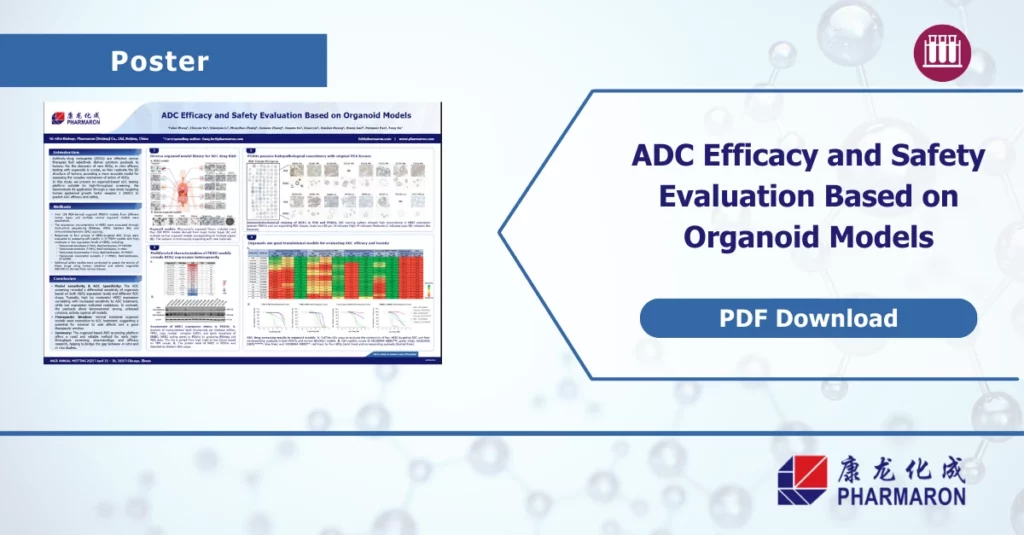
ADC Efficacy and Safety Evaluation Based on Organoid Models
We present a case study showcasing the testing of antibody-drug conjugates (ADC) for efficacy and safety on organoids derived from patient-derived xenograft (PDX) models and organoids derived from healthy intestinal tissue.
This study highlights the platform’s capabilities demonstrated through ADCs that target HER2.
- Over 150 PDX organoid (PDXO) models from diverse cancer types and normal organoids from intestinal tissue were developed.
- HER2 expression was assessed via multi-omics platforms RNAseq, WES, Western blot, and IHC staining.
- Organoid viability testing was performed on 14 PDXO models with varying HER2 levels using four ADCs and their payload and payload+linker controls.
- Safety evaluation was conducted using intestinal organoids.
Key findings:
- Efficacy: High HER2 expression correlated with increased sensitivity to ADC treatment, while lower expression indicated resistance. Payloads alone caused broad cytotoxicity.
- Safety: Intestinal organoids showed minimal response to ADCs, revealing a favorable therapeutic window with reduced gastrointestinal side effects.